

For thousands of years, humankind has been fascinated by the universe, its origins and the study of celestial bodies.

The armillary sphere, also known as the ‘world machine’, was used to illustrate the movements of the celestial bodies.
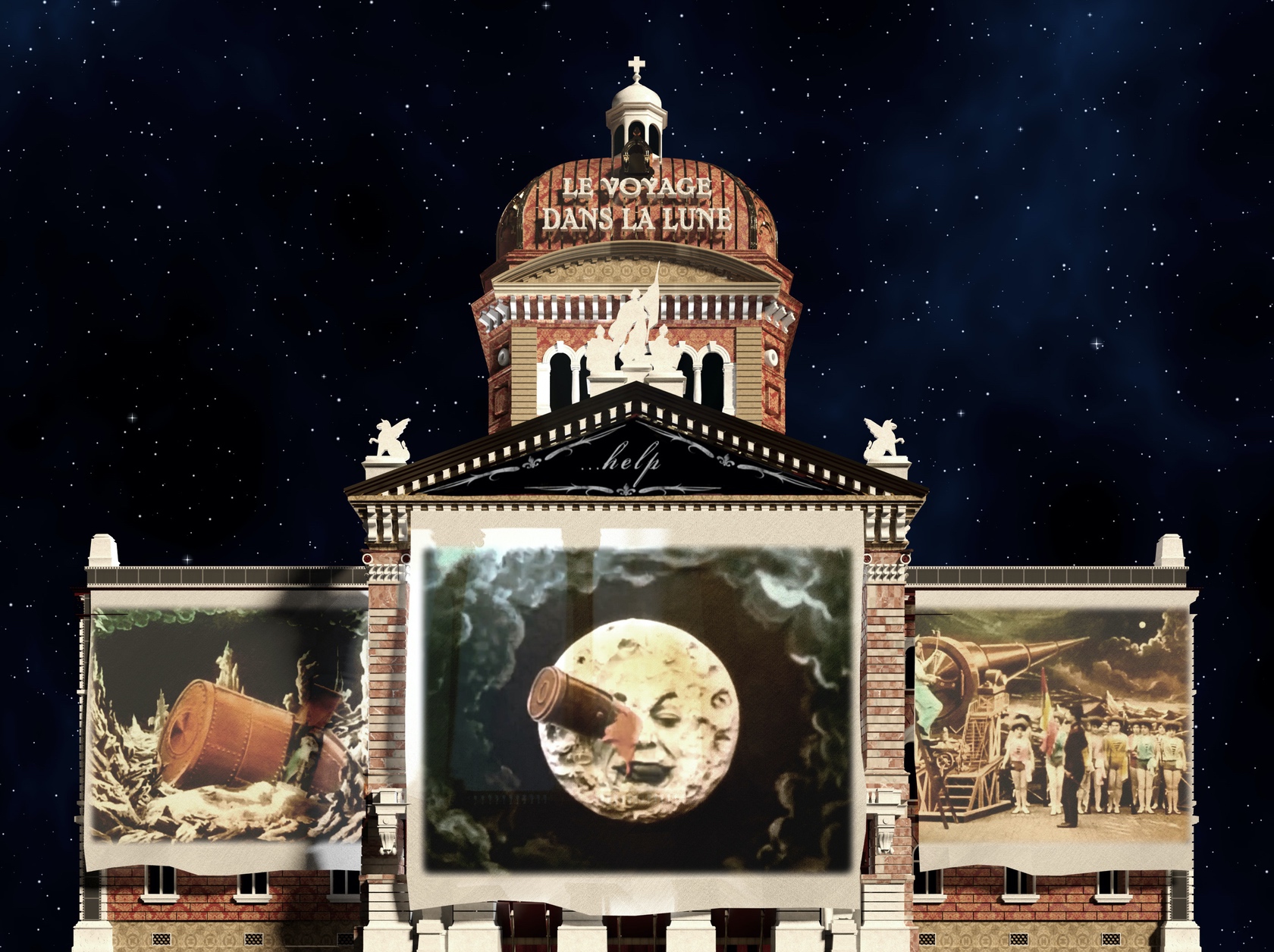
The Bundeshaus is being transformed into a historic cinema: on show are 20th-century visions of moon landings. Short clips from the film “Le voyage dans la lune” (1902) by Georges Méliès, inspired by Jules Verne and H.G. Wells.
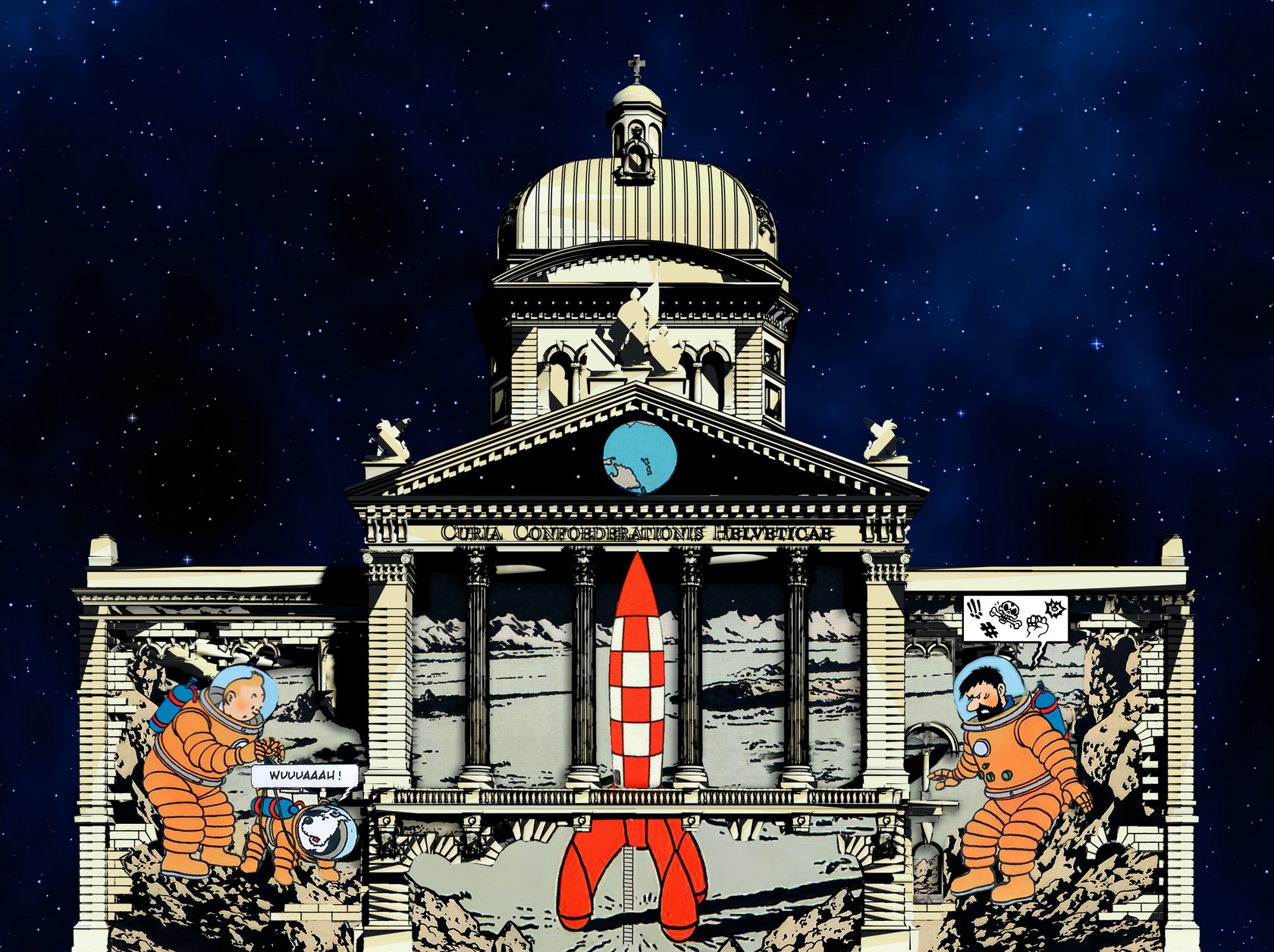
‘Tintin’ is also a must – with an extract from the volume “Explorers on the Moon” (1954). *
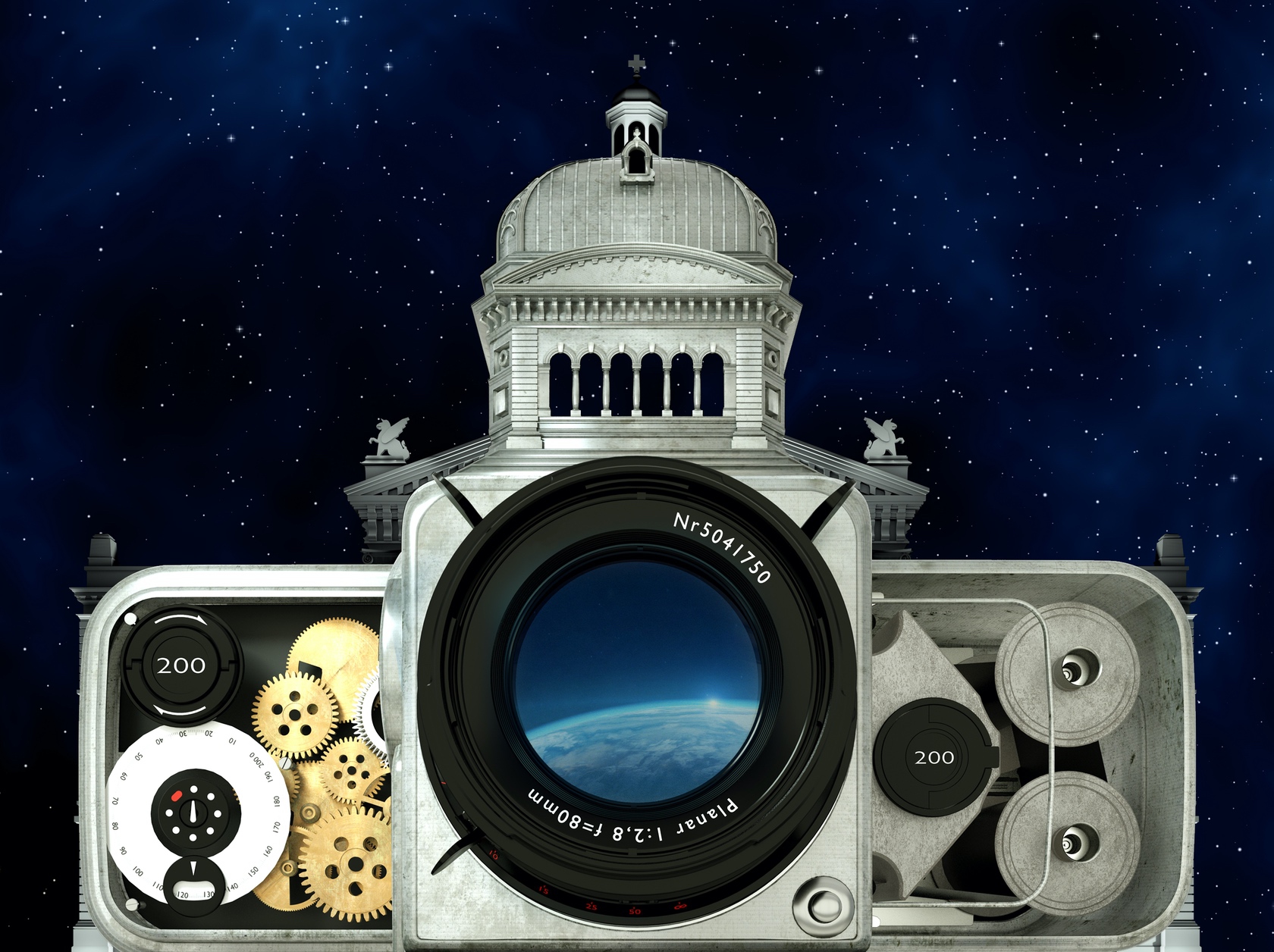
A camera is being built to document the planned journey to the Moon. The mission’s objective – the Moon – is already reflected in its lens.
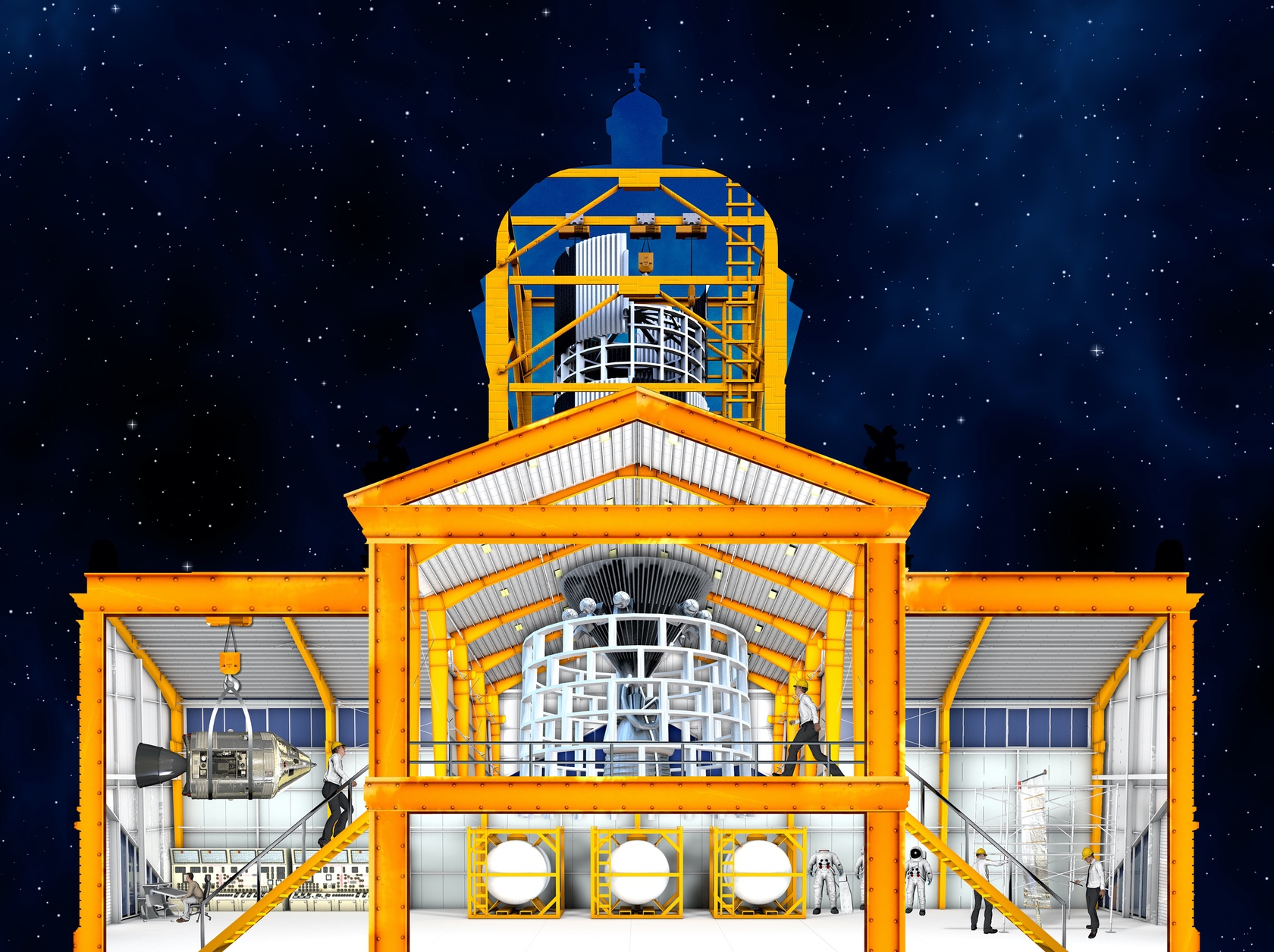
In huge warehouses, work is underway on everything needed to make the moon mission possible. This includes the solar wind sail developed in Bern, which was the only non-US experiment to feature in the moon landing.

The solar wind sail covers the entire façade of the Federal Parliament building.

At the same time, the astronauts are also preparing for the mission. To simulate weightlessness, part of their training takes place underwater.
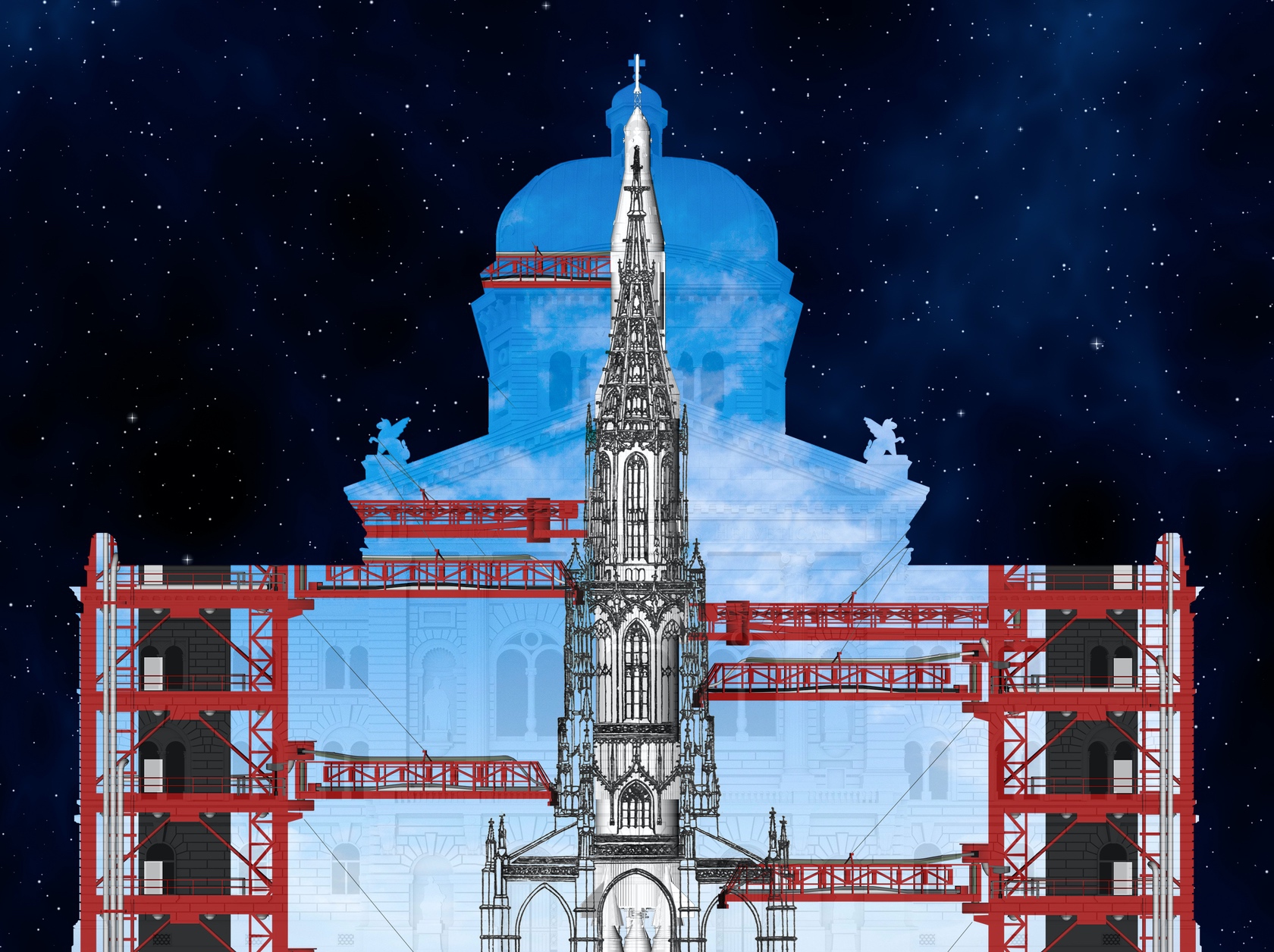
The comparison with Bern Minster is intended to illustrate the rocket’s enormous size, which is over 100 metres.

The Bundeshaus is transformed into a launch pad. After a countdown, the rocket begins its journey into space.

The Federal Palace dissolves; its sections begin to float. Behind it, space appears, and the Earth comes into view. The sections of the building glide into space.

During his space adventure, an astronaut floats towards the audience, waves and invites them to join him on his mission to the Moon.

The dark side of the Moon is also being explored. The famous radio message is: ‘We’ll see you on the other side.’ A clock face appears on the dark side of the Moon; its hands show, in fast motion, the exact duration and time of the first orbit around the Moon.
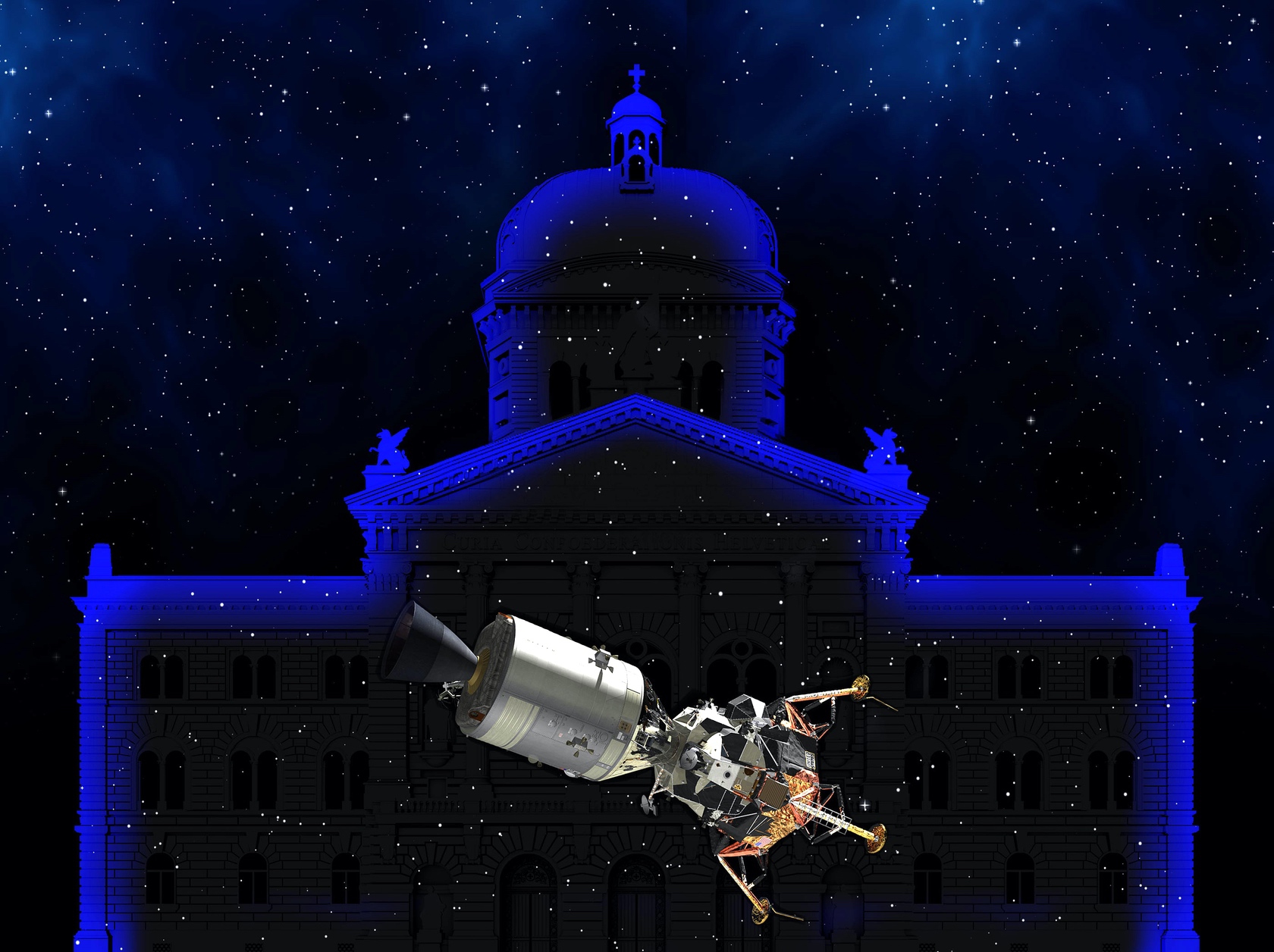
Next comes the approach to the Apollo 11 command module with the Eagle lunar module. The undocking of the lunar module is shown from the perspective of the command module.
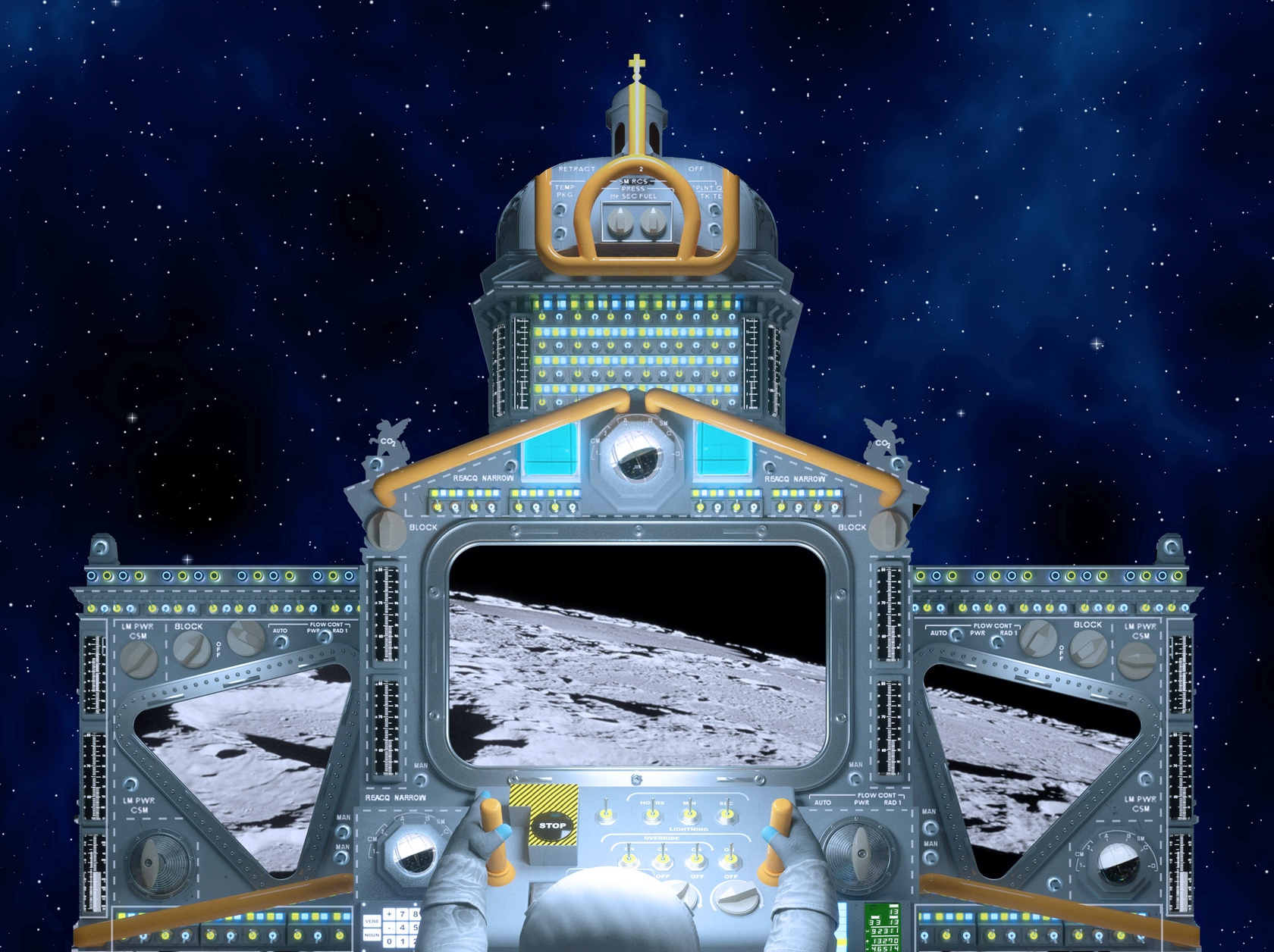
A change of perspective takes us inside the lunar module. From here, we can watch the approach to the Moon’s surface. Armstrong takes manual control of the Eagle. This is followed by the radio transmission: ‘The Eagle has landed’.
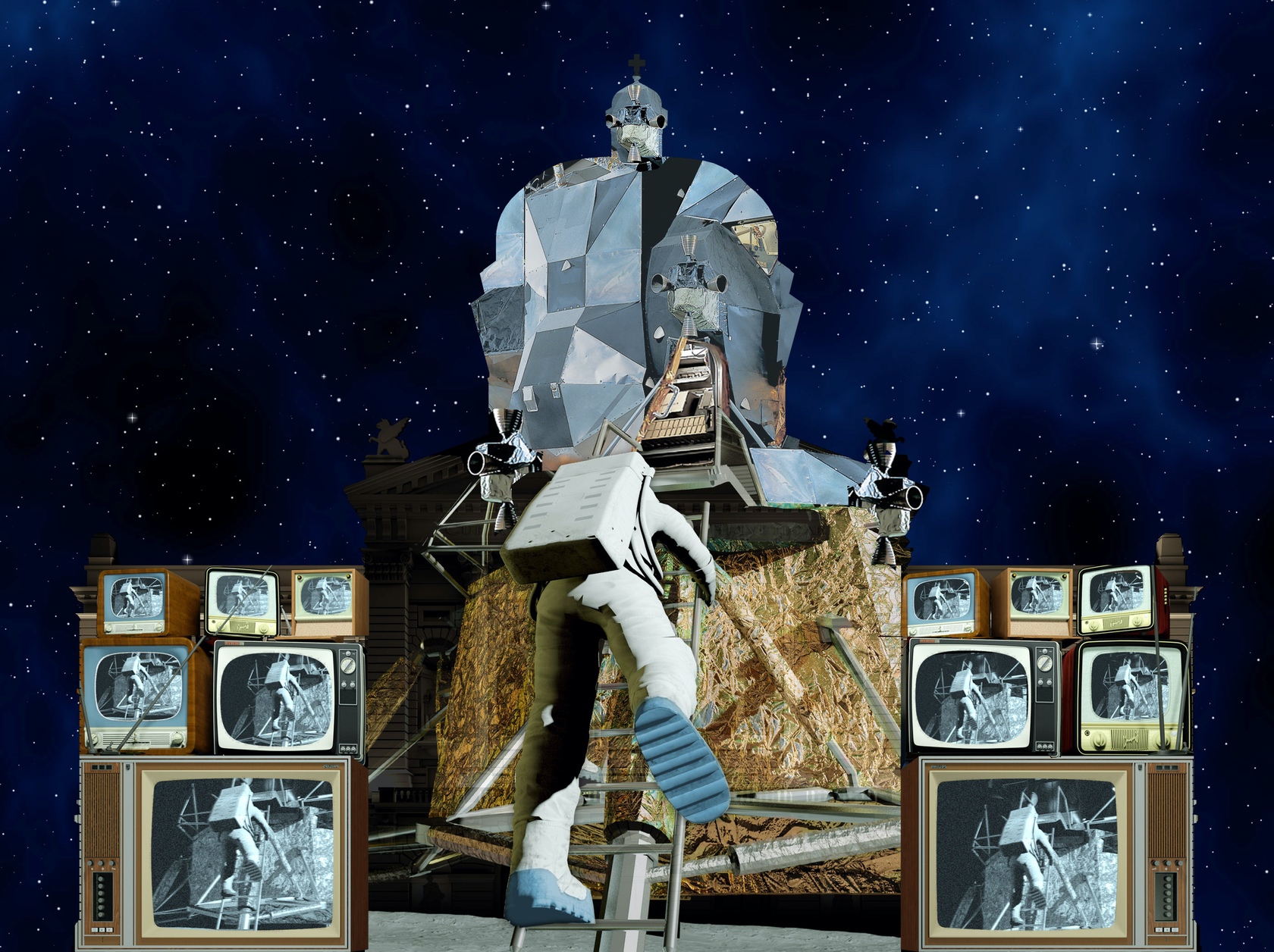
The side wings of the Bundeshaus become television towers: images of the Moon, broadcast worldwide, are shown. The Eagle’s exit side appears on the central façade. Armstrong climbs down the ladder backwards until his foot covers the central section of the façade.

The camera cuts to a shot of the astronaut’s foot touching the surface of the Moon: ‘That’s one small step for a man, one giant leap for mankind.’

The first human footprint is left on the Moon.

Now the journey across the Moon’s surface begins, past the solar wind sail. The Earth appears on the Moon’s horizon.
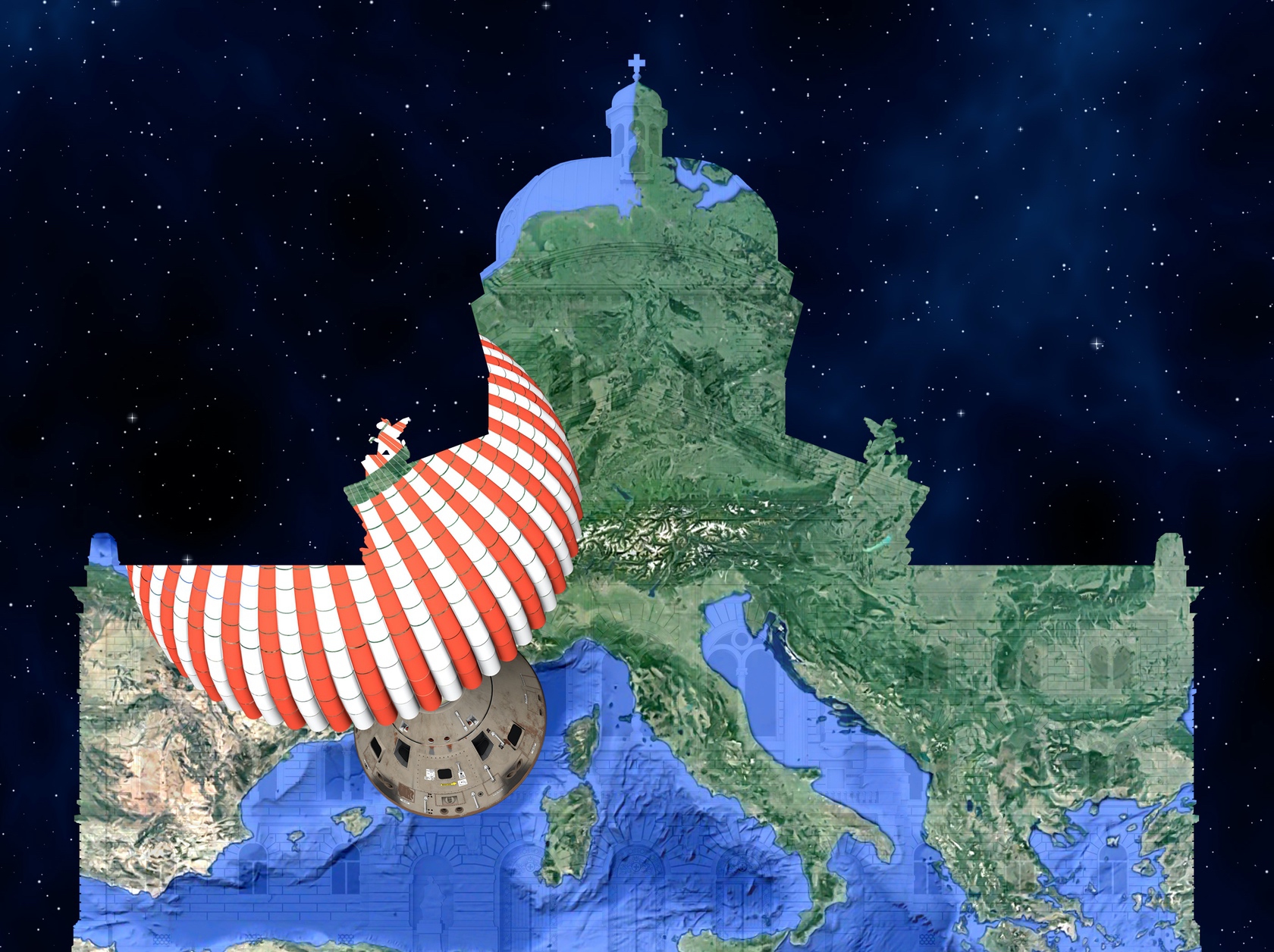
With the words of Apollo 8 astronaut William Anders – “We came all this way to explore the moon, and the most important thing is that we discovered the Earth” – a camera flight begins, travelling from the Moon back to Earth – all the way to Bundesplatz.

The journey ends at Bundesplatz in Bern. The rescue capsule’s landing in the sea is shown through the façade of the Federal Palace, accompanied by a rescue helicopter.
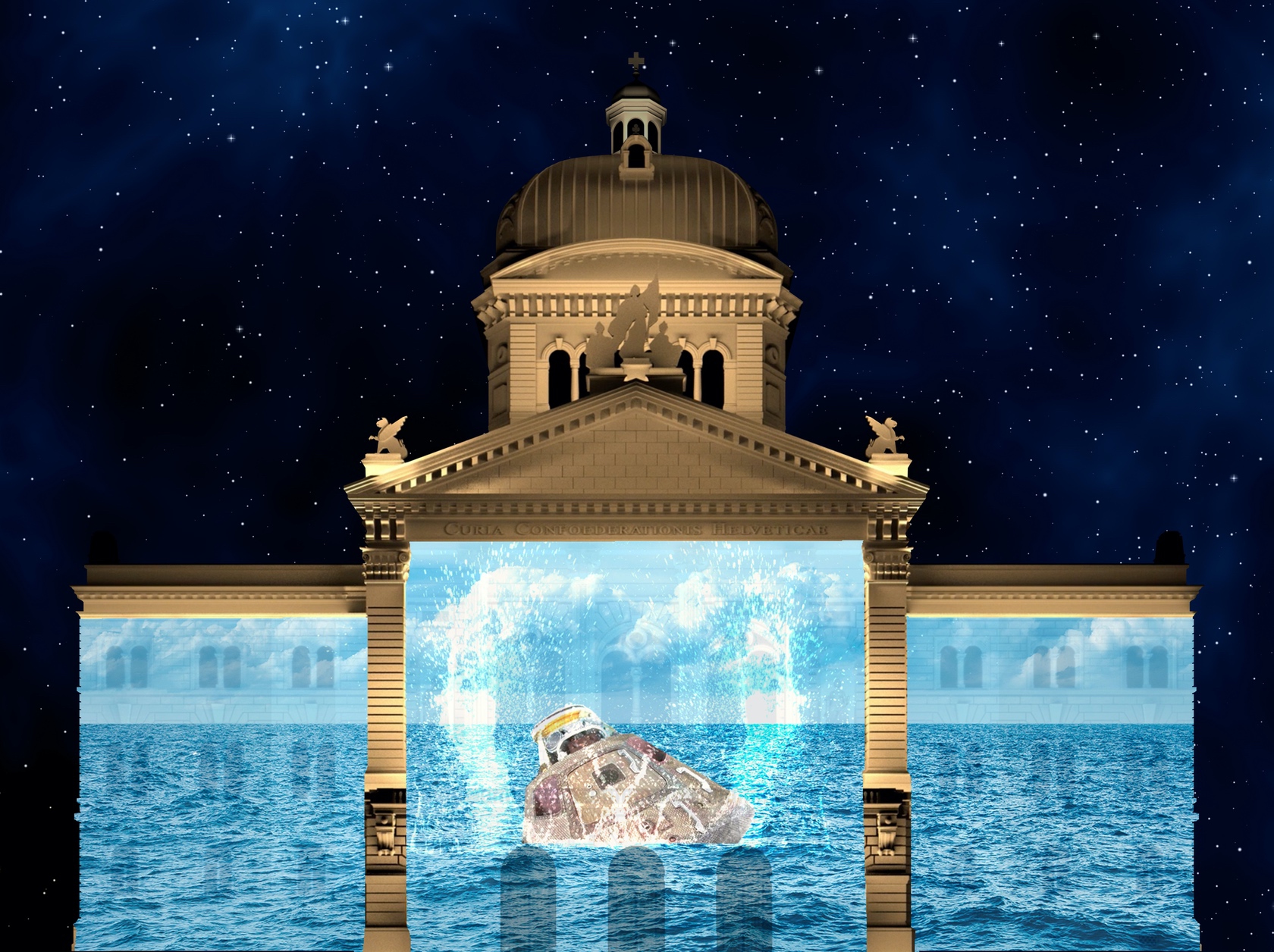
The capsule hits the surface, sending water splashing everywhere. A pane of glass mists over and water droplets form on it.

Three hands sketch the outlines of astronauts from behind and wipe the visors of the drawn astronauts’ helmets clean. The cheerful faces of Armstrong, Aldrin and Collins come into view.
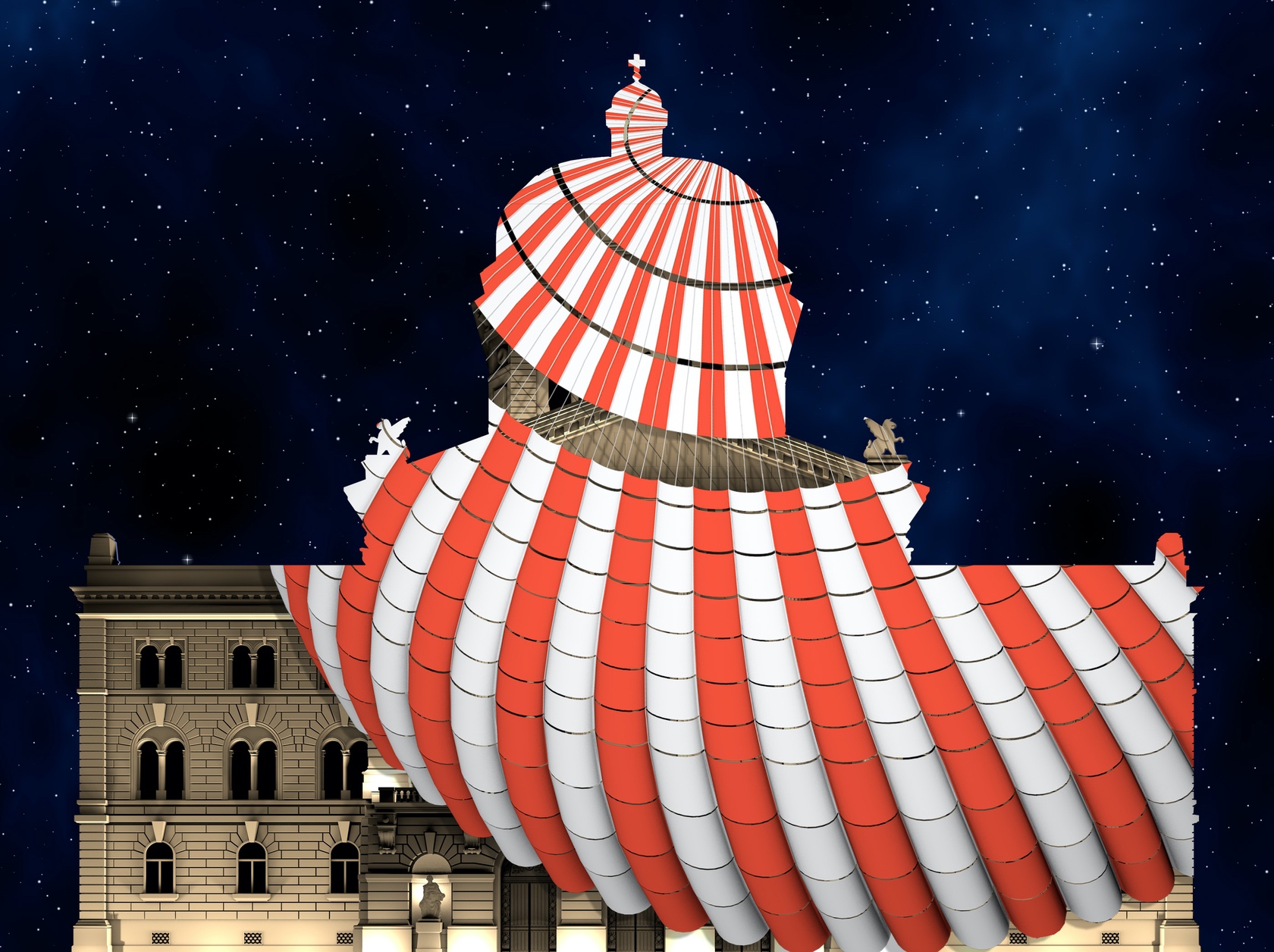
A rescue canopy from the capsule envelops the Federal Palace like an oversized curtain. It glides down from the Federal Palace – and the building bows to the audience.
Thanks for the support goes to
Hergé / Moulinsart S.A.
* for the permission to use the illustrations from Tintin “On a marché sur la Lune”
Music titles show 2019
Prologue: Ludovico Einaudi – Nuvole Nere
Construction of a camera: Pink Floyd – Time
Preparation of the astronauts: Van Morrison – Moondance
Launch of the rocket: Léo Delibes – Blumenduett aus Lakmé
Weightlessness: David Bowie – Space Oddity
Lunar orbit Apollo 8: Pink Floyd – Breathe
Moon landing: Murcof – Unison
Epilogue: Sido – Astronaut (Instrumental mit Refrain)
Credits, inclination House of Parliament: Patent Ochsner – Apollo 11